A BROAD UNDERSTANDING OF KNIFE GATE VALVES
The knife gate valve as we know it today was invented and originated out of a dire need to handle abrasive flow applications, and some of the very first applications it was intended for was sugar cane pulp processing for the pulp and paper industry. Its versatility was then recognised and spread to applications that involved most mineral processing applications.
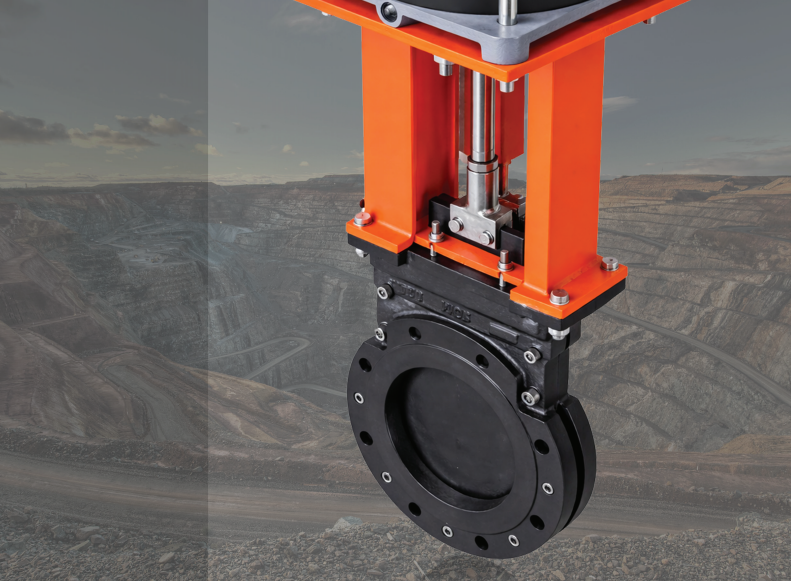
Today the Knife gate valve is a specialized valve, with a wide variety of options, designs, and capacities that are designed for highly effective flow control in abrasive and corrosive applications. Traditionally Knife gate valves operate by using a sharp-edged gate to cut through fluids, offering precise control and isolation over the flow. But today, there are many types on the market, that have 2 major classifications.
THE UNI-DIRECTIONAL and the BI-DIRECTIONAL VALVE
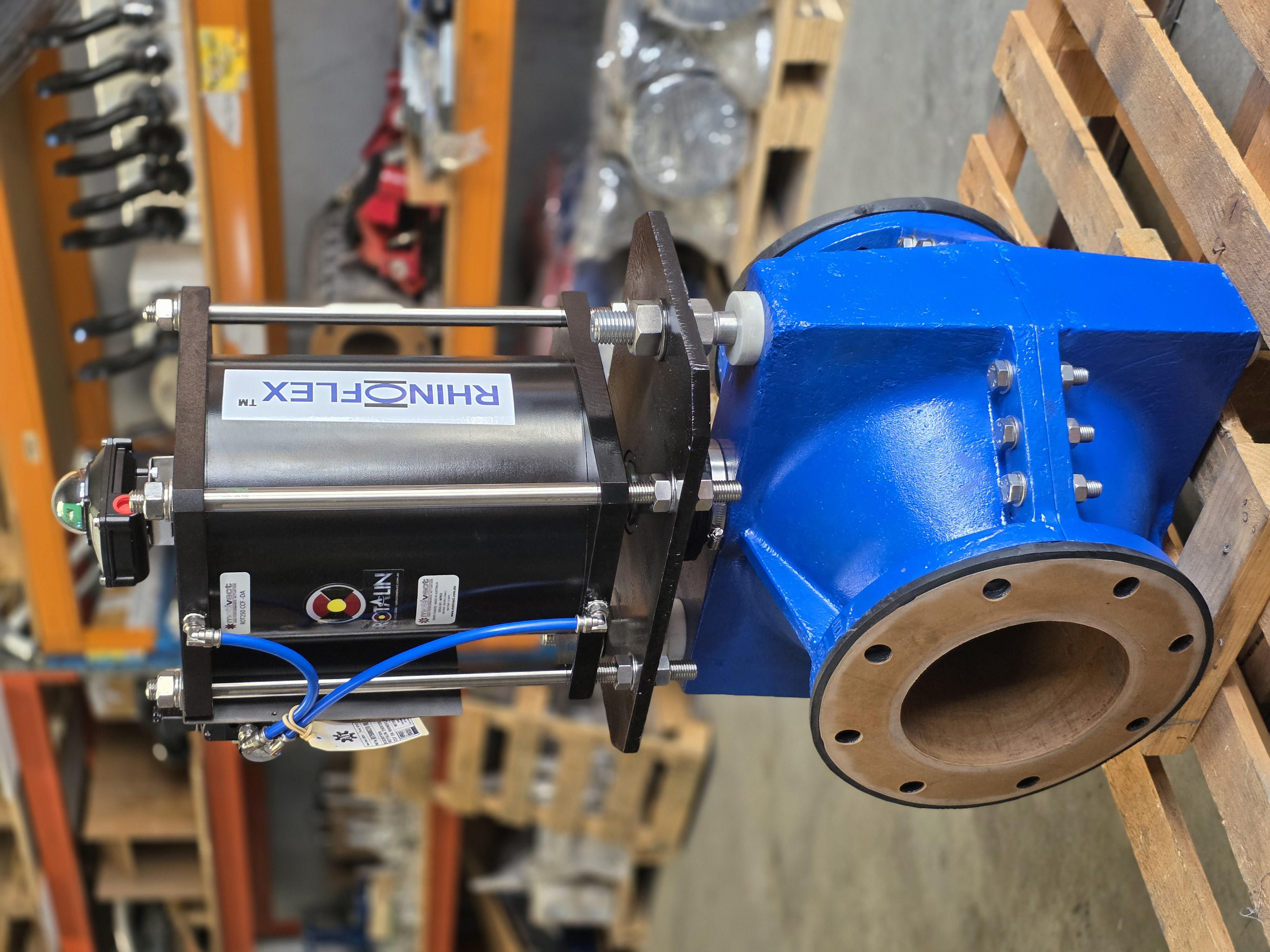
Typically, the Uni-directional valve is designed for the flow to travel in ONE DIRECTION, and if installed in the opposite way, it would not function as intended. Metal seated knife gates, with gate wedges and guides are a very popular unidirectional knife gate valve. These valves are also often enclosed and one-piece bodies, with the gate as the sliding part inside. Modern metal seated valves also can be lined with rubber, polyurethane, and other materials like ceramic, etc, and to prevent premature wear, deflector cones made from Polyurethane or Ni Hard/Ni Resist are very popular for abrasive and extremely abrasive applications.
Bidirectional knife gate valves are valves which are designed for flow to go through from either side of the valve, with no difference in operation, and performance.
These are mostly soft seated (resilient seated) valves, using a very wide variety of seating options and materials. Depending on the pressures that these valves are rated to, they can be either a full perimeter seated valve, side seated valve or a combination of both. Valves with these options are widely used for light slurry applications, where the hard abrasive slurry, does not tear or damage the rubber seat while cycling.
The push through style of knife gate valve, comprises of a split body, and two pop in seats made from rubber with a steel ring inside the seat area. While the valve is open, the profile of these seats, enable the valve to form a flow pathway, that is leak free, and when the gate closes, it splits these rubber seats in between to shut off the flow, forming a solid side seat. These valves are extremely popular and widely used in process plants across the world. They came to be popularly known as “Slurry Knife Gate valves”. These, however, are not an answer to every application, and have their own demerits. Common problems include elastomer seat wear resulting in leaking and discharge into the environment. Slurry valves also come in many design variants: push-through seal, perimeter seal, shear gate, o-port, rotating disc type, and each design is chosen based on the application intended for the valve and the number of cycles it would need to operate in a certain timeframe. Heavy duty slurry service will demand a shear gate style, with a variety of alloy seat rings and gate materials to combat premature wear.
Selection of valve will also depend on the mounting orientation and space available at that junction. If larger valves are actuated and are mounted, anything other than vertically, they would require supports, so as not to put stress or strain on the pipeline below. The preferred orientation is one that minimizes chances of any jamming of the gate, due to the settlement of media in any crevices within the valve body.
TODAYS CHOICE OF KNIFE GATE VALVES
Knife gate valves have now been made bigger, and the 900mm valves are a very popular size for a variety of applications. Most process plants are pushing for more through-put; therefore, the valve sizes increase along with the flow rates and pressures. Polyurethane lined valves, specially coated gates, exotic alloy trims seats and seals, modern gland packing methods and materials, bonneted vs bonnetless and high-pressure designs, all comprise the variety of options one must choose from while choosing a knife gate valve. Expert understanding on valve types, performance and capacities, piping, process media types, pressures, flow rates, material and trim options, actuation and instrumentation options, are all required for the proper selection of a knife gate valve to function at its optimum levels.
In conclusion, knife gate valves are a major contributor to process efficiency. Their ability to provide reliable isolation or flow control and to minimize downtime and maintenance makes this valve a popular choice. This in turn leads to reduced operational costs, and improved productivity.
Therefore, the knife gate valves as we know it today, are an integral component in the efficient management of abrasive and aggressive slurries. Their versatile design, quality build and construction, variety of trims and materials, makes the knife gate valve a popular choice for many demanding applications.